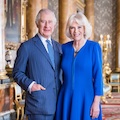
The Duchess of Edinburgh visits Bosnia and Herzegovina
Published 11/07/2025
The Duchess of Edinburgh has visited Bosnia and Herzegovina to attend the 30th Anniversary of the Srebrenica Genocide, where she delivered a message from The King.

Day Two
On behalf of The King, The Duchess of Edinburgh attended the Commemoration of the 30th Anniversary of the Srebrenica Genocide, where she read out a message from His Majesty.
Three decades on, it is ever more important to remember all those who suffered, and to redouble our efforts to ensure a peaceful, stable future for all the citizens of Bosnia and Herzegovina.
Read His Majesty's message in full, here.
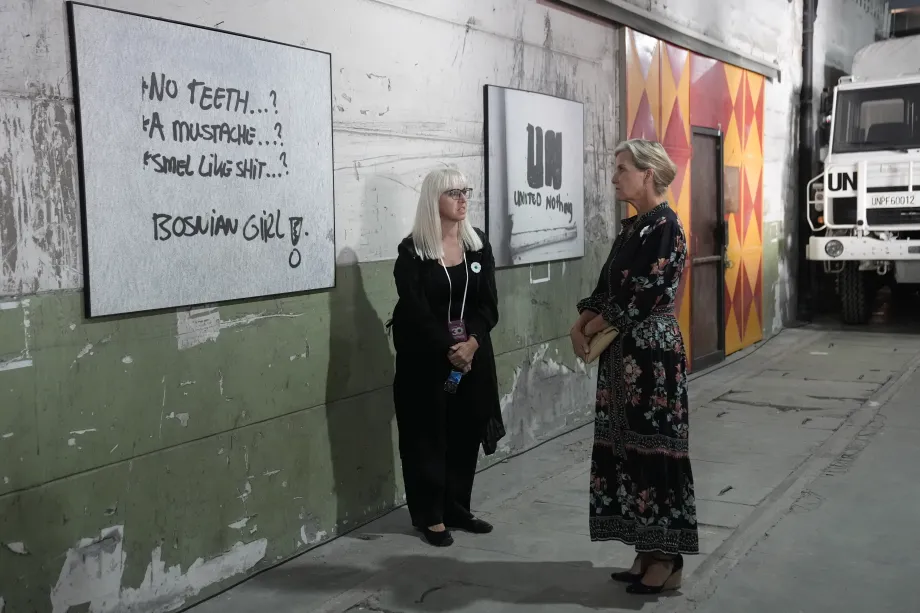
The Srebrenica Memorial Centre, the location of the Commemoration, is housed in the old battery factory, which served as the UN base in 1995 and where thousands of people sought protection leading up to the fall of Srebrenica.
Her Royal Highness viewed the UK-funded exhibition, “In the footsteps of those who have (not) crossed”, which displays the personal belongings of people who were killed by Bosnian Serb forces in July 1995, as well as items owned by people who survived.
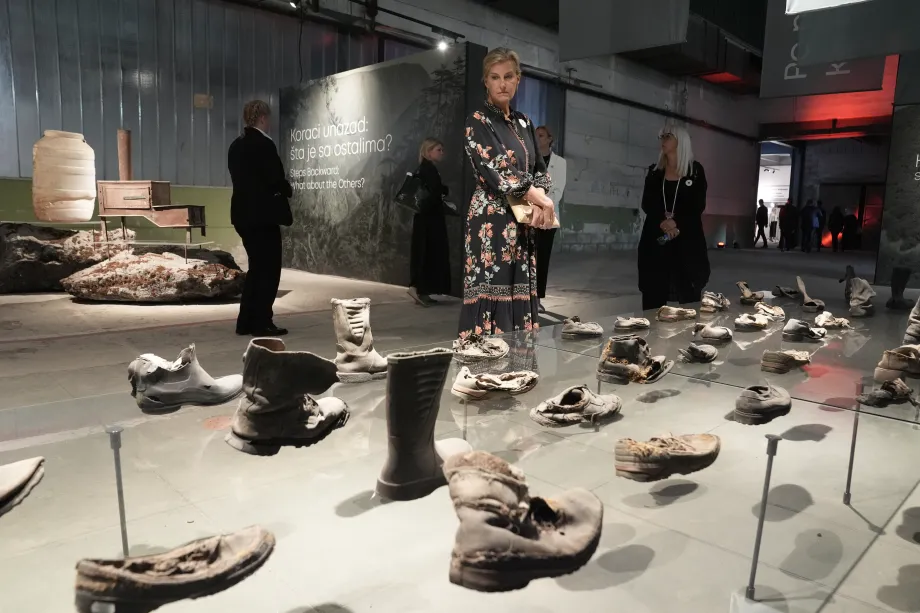
Some of the items were found on the path taken by the so-called ‘March of Death’, a column of escapees who fled Srebrenica to Nezuk - many Bosniaks were killed on this route as they tried to escape to safety.
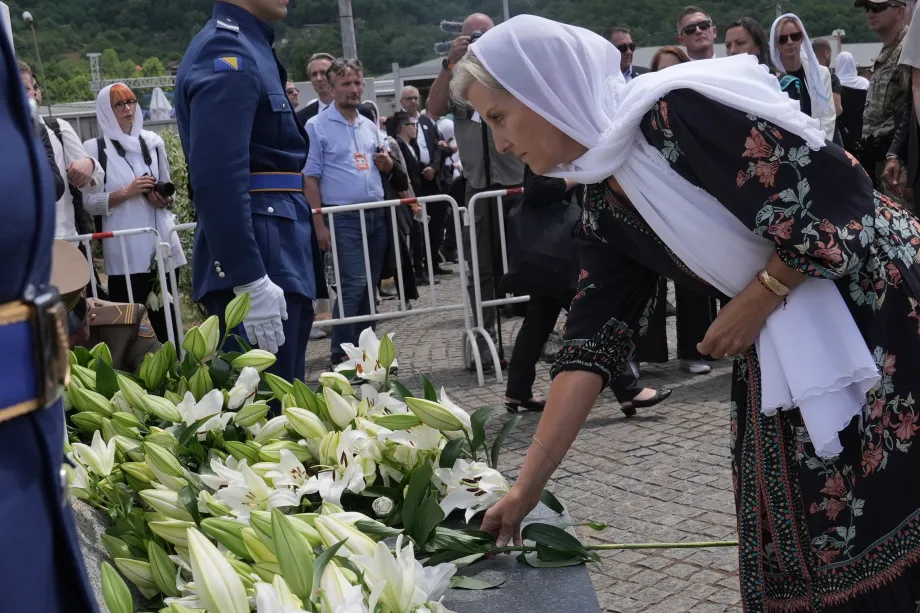
Following the Commemoration, Her Royal Highness visited the memorial cemetery, paying a silent tribute to seven Muslim victims whose remains have been identified and are being buried on the anniversary, and laying a flower in front of the Memorial to all the victims. The remains of 6765 victims of the genocide are buried in the Cemetery.
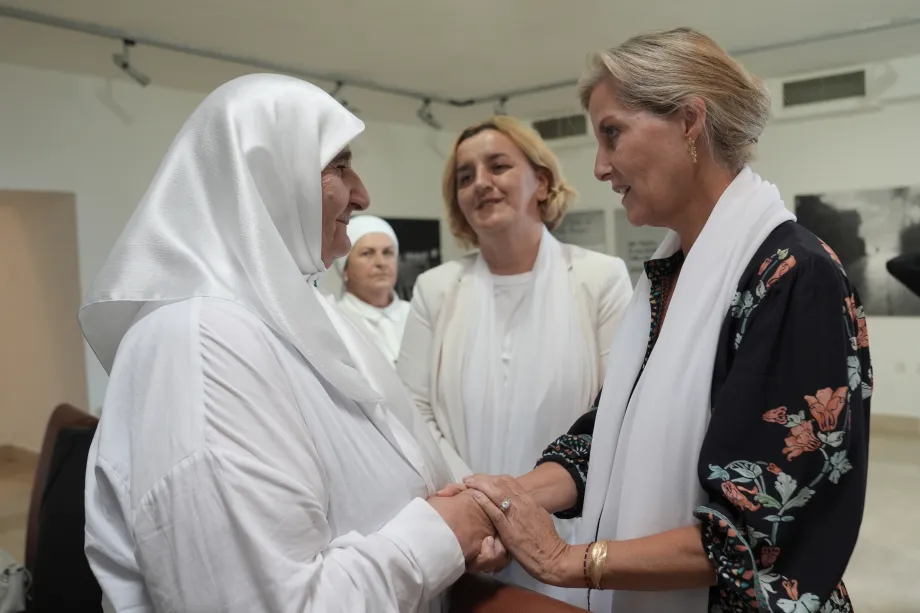
The Duchess then met a small group from the associations ‘Mothers of the Enclaves of Srebrenica and Žepa’, hearing first-hand from the families of victims about efforts to heal the wounds of war and ensure justice is done. The Mothers demonstrate on the 11th of every month to remind the public of those whose fate is still not known. Many Mothers have died since the 1990s, some never finding their sons or loved ones.
Day One
After arriving in Sarajevo, The Duchess attened a meeting with the Croat member of the Bosnia and Herzegovina Presidency, Željko Komšić, to discuss the 30th anniversary of the Srebrenica Genocide.
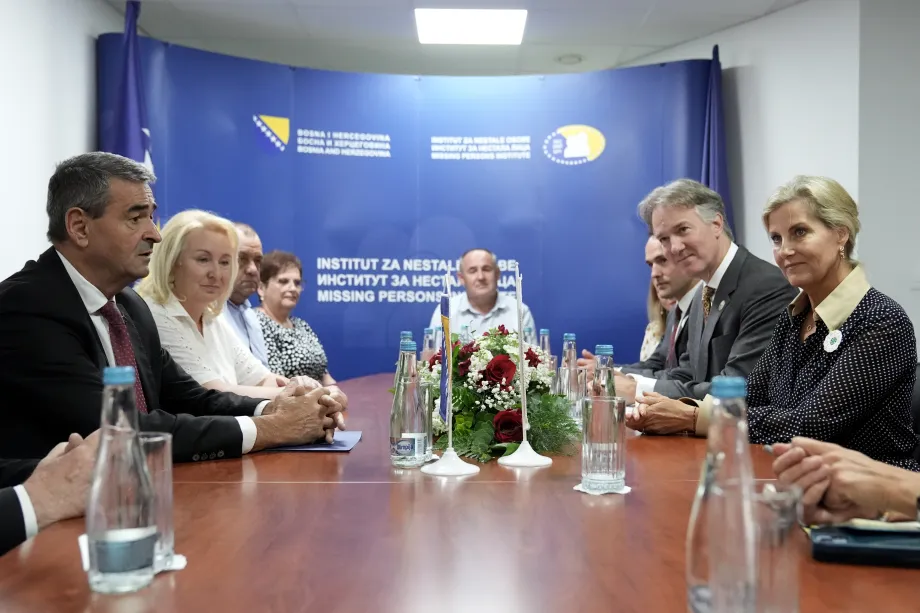
Her Royal Highness also attended a meeting with the Missing Persons Institute of Bosnia and Herzegovina, which works across ethnic divides to find missing persons from the 1990s war.
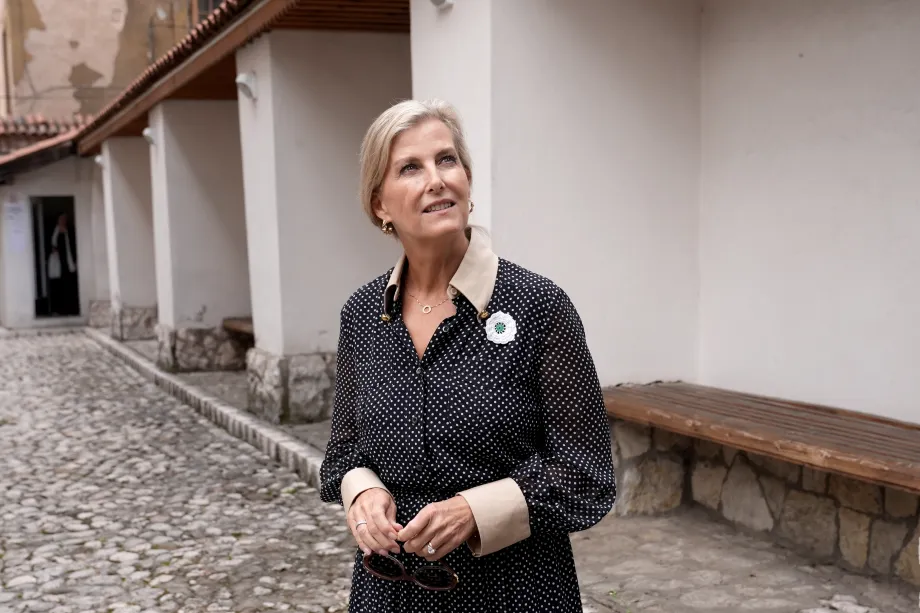
The Duchess later walked through Sarajevo’s Old Town, where she heard from a local female peace builder, Velma Šarić, and learnt more about the impact of the conflict on women and the role they play in reconciliation.
The Old Town’s Ottoman and Austro-Hungarian architecture, with war damage still visible in places, is a visible reminder of Sarajevo’s long history as a multi-religious, multiethnic, contested city.
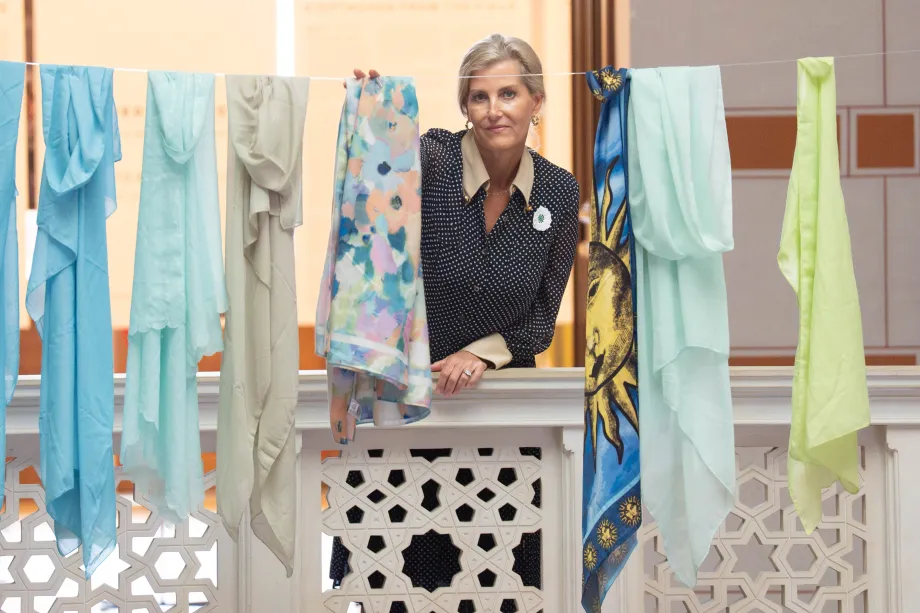
Her Royal Highness left a headscarf in Sarajevo City Hall which is part of a memorial to the resilience and role that women played during the war 30 years ago.
The Duchess also undertook a private discussion with survivors of conflict related sexual violence, an issue about which she has long raised awareness.
Related content

The Duchess of Edinburgh will visit South and Central America

More details on the upcoming State Visit by The Emperor and Empress of Japan
The King and Queen, joined by Members of the Royal Family, will mark the 80th anniversary of the D-Day Landings
A speech by The Duchess of Edinburgh, via video message, at the Restoration of the Conflict-Related Sexual Violence Survivors’ Rights Conference, Ukraine
We must stand shoulder to shoulder with all survivors to secure justice and holistic redress, and ensure that this crime isn’t an accepted part of conflict.